Hanukkah food
Sufganiyot, Latkes and More: The Traditional Foods of Hanukkah
Jelly doughnuts dusted with sugar, crisp potato pancakes and a few surprises – how one jar of oil turned Hanukkah into the most delicious week of the Jewish year.
By the PicJew team
·
·
4 min read
Every Jewish holiday has its flavors, but few are as instantly recognizable as those of Hanukkah. For eight nights, Jewish kitchens turn into small fry shops, producing golden latkes, sugar-dusted doughnuts and a surprising range of local specialties. The reason is simple and symbolic at the same time: oil.
Why we eat fried food on Hanukkah
The central miracle of Hanukkah involved a single jar of pure olive oil that kept the Temple menorah burning for eight days. Eating foods fried in oil is a delicious way to remember that miracle. It is a custom rather than a law, which explains why every community developed its own Hanukkah dishes – each one a small celebration of the oil that made the festival.
Sufganiyot: Israel's favorite Hanukkah treat
Sufganiyot are deep-fried yeast doughnuts, traditionally filled with red jam and topped with a generous snow of powdered sugar. The name comes from the Hebrew word for sponge, describing the soft, airy dough.
Filled doughnuts were known in Europe for centuries, and Polish Jews enjoyed a version called ponchiks. In the modern State of Israel, however, sufganiyot became the national symbol of the holiday. Bakeries begin selling them weeks before Hanukkah, and millions are eaten every year. Today's bakers compete with fillings such as chocolate, caramel, pistachio cream and halva, but the classic strawberry jelly doughnut remains the favorite.
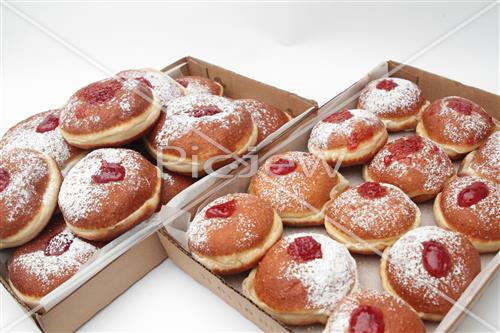 Fresh sufganiyot by the box – Israel's favorite Hanukkah treat.
Tips for perfect sufganiyot at home
- Let the dough rise slowly; a well-proofed dough gives the light texture and the white "belt" around the middle.
- Keep the oil at a steady medium heat, around 340°F (170°C), so the outside browns while the inside cooks through.
- Fill the doughnuts while still warm, using a piping bag, and dust with powdered sugar just before serving.
Latkes: the taste of Eastern Europe
In Ashkenazi homes, especially in North America, Hanukkah means latkes – crisp pancakes of grated potato and onion, fried until golden and served with applesauce or sour cream. Interestingly, the earliest Hanukkah pancakes were made from cheese. Potatoes only became the standard ingredient in Eastern Europe in the nineteenth century, when they were cheap and plentiful through the long winter.
Latkes, the crispy way
- Squeeze as much liquid as possible out of the grated potatoes.
- Add egg and a little flour or matzah meal to bind the mixture.
- Fry in a shallow layer of hot oil and drain on paper towels. Serve immediately.
The dairy tradition and the story of Judith
Many communities also eat dairy foods on Hanukkah. The custom recalls the story of Judith (Yehudit), a heroine who, according to tradition, fed salty cheese to an enemy general to make him thirsty, gave him wine until he fell asleep, and then saved her city. Cheese pancakes, cheese latkes and creamy desserts all honor her courage alongside the Maccabees.
Hanukkah foods around the Jewish world
- Bimuelos (bunuelos) – Sephardic fried dough puffs, often soaked in honey or syrup.
- Sfenj – light Moroccan doughnuts, fried in rings and dusted with sugar or dipped in honey.
- Zalabia – crunchy fried dough in syrup, enjoyed by Jews from Iraq and other Middle Eastern countries.
- Italian fried chicken – a festive Hanukkah dish in Italian Jewish communities.
Lighter options for a week of frying
Eight nights of fried food can be a lot. Many cooks bake latkes on an oiled tray or prepare mini doughnuts in the oven, keeping the symbolism of oil while lightening the menu. Vegetable latkes made from zucchini, sweet potato or carrots add color, and a simple salad dressed with good olive oil is a fresh way to honor the miracle. The custom is about remembering, not about overeating.
Bringing the flavors to the table
Whatever your family's tradition, Hanukkah food is about more than taste. It turns the story of the oil into something children can see, smell and enjoy, and it brings family and friends together around the menorah each night. Serve the fried treats after the candle lighting, while the lights are still burning, and the connection becomes clear to everyone at the table.
Planning a holiday menu, a recipe blog or a festive newsletter? Find mouth-watering sufganiyot pictures, latkes photos and more Hanukkah images in the PicJew collection, and read the full story of Hanukkah behind the traditions.